


Understanding Ransomware Attacks
Ransomware attacks have emerged as one of the most disruptive cybersecurity threats in the modern digital landscape. Unlike attacks that quietly steal data, ransomware is designed to cause immediate impact by denying access to critical systems and files.
These attacks affect individuals, businesses, healthcare providers, and government institutions alike. Their effectiveness lies not in technical sophistication alone, but in the pressure they create through operational disruption and fear of data loss.
Understanding how ransomware works and how it spreads is essential for protecting devices, safeguarding data, and maintaining digital resilience.
What Is Ransomware?
Ransomware is a type of malicious software that encrypts files or locks systems, preventing legitimate access. Attackers then demand payment, typically in cryptocurrency, in exchange for restoring access.
Once ransomware executes, it systematically targets documents, databases, images, and other valuable files. Victims are presented with ransom messages that set deadlines and threaten permanent data loss.
Paying the ransom does not guarantee recovery, as attackers may fail to provide decryption keys or leave systems partially damaged.
.webp)
The Psychology Behind Ransomware Attacks
Ransomware relies heavily on psychological pressure rather than stealth. Attackers exploit urgency, fear, and the perceived value of data to force rapid decision-making.
Countdown timers, threatening language, and warnings about public data leaks are commonly used to increase stress and reduce rational evaluation of options.
This emotional manipulation often leads victims to act quickly, sometimes without consulting security professionals or exploring recovery alternatives.
Common Infection Vectors
Ransomware spreads through multiple entry points, with phishing emails being the most common. Malicious attachments or links disguise themselves as invoices, reports, or urgent notifications.
Exploited software vulnerabilities also play a major role. Unpatched operating systems and applications provide attackers with direct access to systems.
In some cases, compromised remote access services allow attackers to manually deploy ransomware across networks.
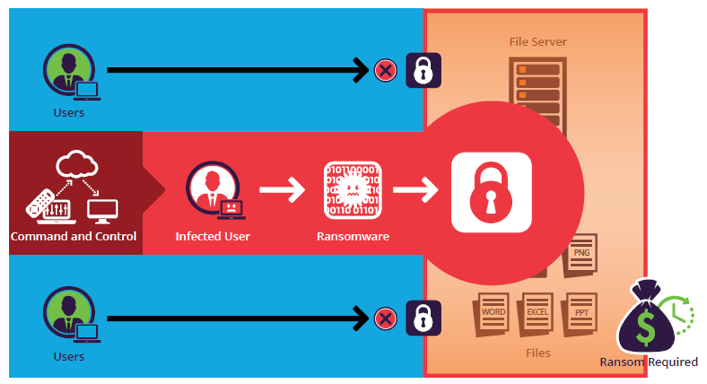
How Ransomware Spreads Within Networks
Once inside a system, ransomware rarely remains confined to a single device. Modern ransomware families are designed to move laterally across connected computers, servers, and shared storage by exploiting weak passwords, stolen credentials, network vulnerabilities, and unsecured remote access services. Shared folders and improperly configured permissions provide attackers with additional pathways to encrypt valuable organizational data. Without proper network segmentation and access controls, a single infected endpoint can quickly become the starting point for a large-scale compromise affecting multiple departments and critical business operations.
Many ransomware variants actively search for backup locations, network drives, and cloud-synced folders before launching encryption routines. Their objective is to disable recovery options by deleting shadow copies, encrypting backup files, or attempting to compromise connected backup systems. Some advanced strains also terminate security software and administrative tools to avoid detection during the attack. These capabilities significantly increase the overall impact of the incident by limiting an organization’s ability to restore critical information without disruption.
The rapid propagation of ransomware can transform a single compromised workstation into an organization-wide outage within a short period. Critical business applications, databases, shared documents, and operational systems may all become inaccessible simultaneously, interrupting daily operations and essential services. Early detection, network monitoring, endpoint protection, and effective incident response procedures play a vital role in limiting the spread and minimizing the overall damage caused by ransomware attacks.
The Impact of Ransomware Attacks
The consequences of ransomware extend far beyond the immediate financial costs associated with ransom demands. Organizations often experience prolonged operational downtime, disrupted business processes, reduced productivity, and unexpected expenses related to system recovery and forensic investigations. Customer confidence may decline if sensitive information becomes inaccessible or if services remain unavailable for extended periods. In many cases, reputational damage can have long-lasting effects that continue well after technical recovery has been completed.
In critical sectors such as healthcare, energy, transportation, financial services, and public infrastructure, ransomware attacks may threaten essential services and public safety. Hospitals may lose access to patient records, utilities may experience service interruptions, and emergency response organizations may face operational delays. These disruptions highlight that ransomware is not only a cybersecurity concern but also a significant business continuity and public safety challenge requiring proactive planning and preparedness.
Recovery efforts following a ransomware attack frequently involve rebuilding affected systems, restoring clean backups, validating data integrity, strengthening security controls, and conducting detailed investigations to identify the original point of compromise. Organizations may also need to notify stakeholders, satisfy regulatory reporting requirements, and implement additional security measures to prevent future incidents. Comprehensive recovery often requires collaboration between technical teams, management, legal advisors, and external cybersecurity specialists.
Preventive Measures That Reduce Risk
Preventing ransomware requires a layered cybersecurity strategy that combines technology, user awareness, and proactive system management. Regular software updates and timely security patches eliminate vulnerabilities that attackers commonly exploit to gain unauthorized access. Endpoint protection, vulnerability assessments, and continuous monitoring further strengthen defenses by identifying suspicious behavior before ransomware can execute successfully. Maintaining secure configurations across all systems significantly reduces the organization’s overall attack surface.
Security awareness training helps employees recognize phishing emails, malicious attachments, deceptive links, and social engineering attempts before interacting with harmful content. Multi-factor authentication provides an additional layer of protection by preventing unauthorized account access even when passwords are compromised. Organizations should also enforce strong password policies, limit administrative privileges, and regularly review user access permissions to minimize opportunities for attackers to move throughout the network.
Network segmentation, application allowlisting, secure remote access controls, and the principle of least privilege all reduce the ability of ransomware to spread across organizational environments. Regular security assessments, penetration testing, and backup verification further strengthen resilience against evolving threats. By combining preventive technologies with well-informed users and clearly defined security policies, organizations create multiple barriers that significantly reduce ransomware risk.

The Importance of Backups and Recovery Planning
Reliable backups remain one of the most effective defenses against ransomware because they allow organizations to restore critical information without relying on attackers. Offline, immutable, or air-gapped backups provide additional protection by preventing ransomware from encrypting or deleting recovery data. Maintaining multiple backup copies stored in separate locations ensures greater resilience against hardware failures, cyberattacks, and accidental data loss while supporting faster recovery during emergencies.
Backup strategies should be tested regularly to verify that files can be restored quickly, completely, and without corruption. Organizations should define recovery objectives, document restoration procedures, and periodically perform disaster recovery exercises to evaluate their readiness. Automated backup monitoring and integrity verification help identify issues before they affect recovery efforts. A backup that has never been tested cannot be assumed to provide reliable protection during a real incident.
A comprehensive recovery plan minimizes operational downtime, reduces financial losses, and eliminates unnecessary pressure to pay ransom demands. Clear communication procedures, defined recovery priorities, and assigned responsibilities help organizations respond efficiently during high-pressure situations. Preparing recovery strategies before an attack occurs significantly improves resilience and supports a faster return to normal business operations.
Responding to a Ransomware Incident
When ransomware is detected, immediate isolation of affected systems is essential to prevent the malware from spreading to additional devices and network resources. Disconnecting compromised computers from wired and wireless networks limits attacker movement while preserving valuable evidence for investigation. Organizations should activate their incident response plans, notify appropriate personnel, and avoid making unnecessary changes that could interfere with forensic analysis or recovery activities.
Incident response teams should assess the scope of the compromise, identify the ransomware variant, determine how attackers gained access, and evaluate whether trusted decryption tools are available. Security logs, endpoint telemetry, and threat intelligence resources assist in understanding the attack and preventing further compromise. Collaboration with cybersecurity specialists and law enforcement agencies may also support investigation and coordinated response efforts when appropriate.
Transparent communication with employees, customers, business partners, and regulatory authorities is critical throughout the recovery process. Organizations should provide accurate updates while avoiding speculation and ensuring compliance with applicable legal requirements. Careful planning, documented response procedures, and continuous post-incident improvements strengthen future resilience and reduce the likelihood of similar ransomware incidents occurring again.
Conclusion
Ransomware attacks succeed by combining technical exploitation with psychological pressure, creating significant operational, financial, and reputational challenges for organizations of all sizes. Although the threat landscape continues to evolve, the consistent application of strong cybersecurity practices dramatically reduces the likelihood and impact of successful attacks. Prevention, preparedness, and continuous improvement remain the foundation of effective ransomware defense strategies.
By understanding how ransomware spreads, maintaining reliable backups, implementing layered security controls, and preparing comprehensive incident response plans, individuals and organizations can confidently strengthen their cyber resilience. Investing in awareness, proactive security measures, and recovery planning not only protects valuable data but also supports long-term business continuity in an increasingly connected digital environment.
Leave a Reply